DENAIR engineering decisions · Diagnostics and service evidence
HVAC Engineer · Certified HVAC Specialist · Manager at DENAIR, Dubai
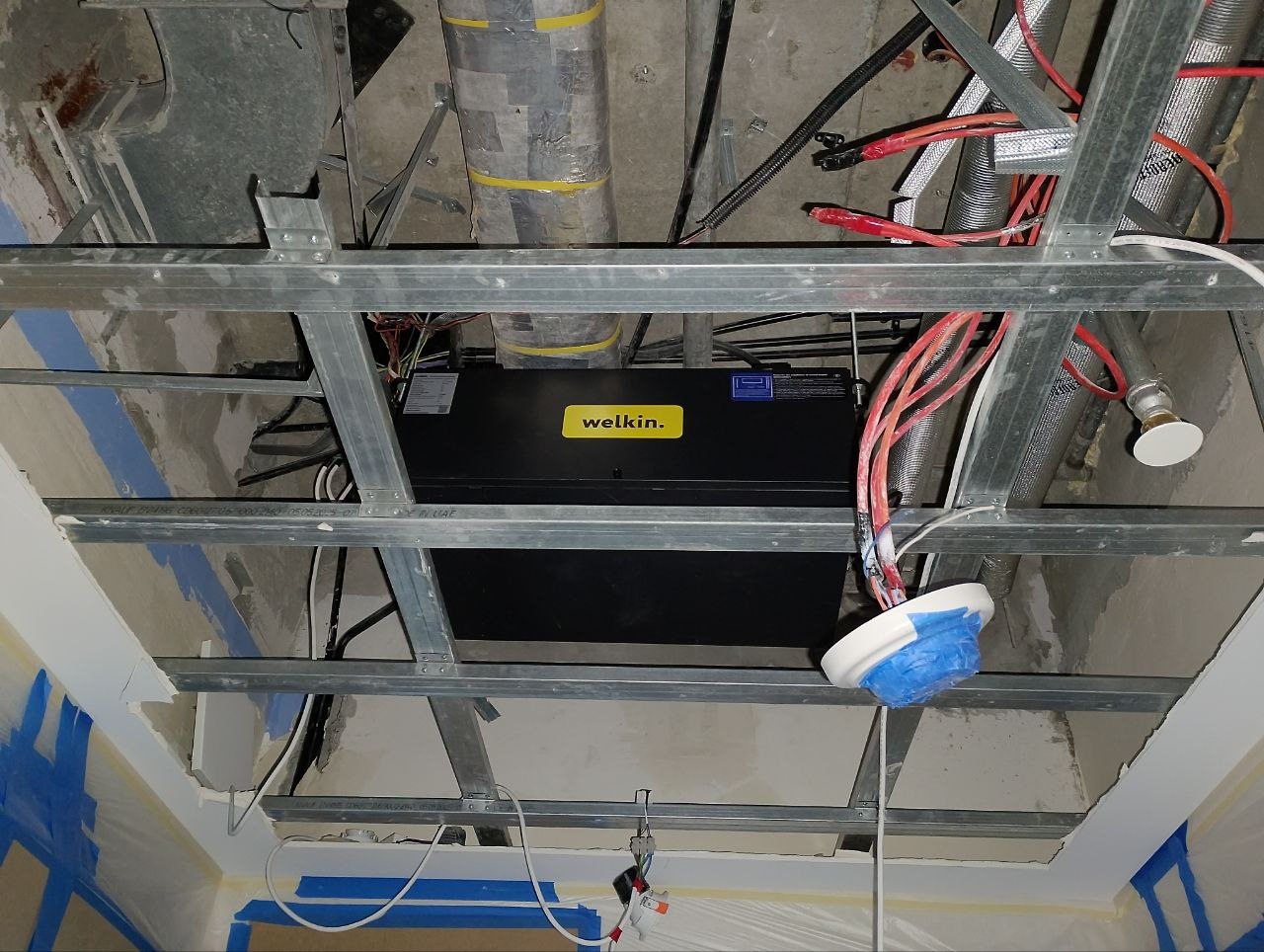
Ducted dehumidifier equipment in an open Oceana ceiling. DENAIR field record; this image documents the pictured equipment or work stage, not a verified result for another property.
Identify the surface and the timing
Note which window and room are affected and, where safely observable, which side of the glass carries the moisture. Record the time, whether the AC was operating and whether the condition appeared after a change in use. Photograph the wider context as well as the visible moisture.
Do not assume that every wet frame is caused by indoor humidity. Rainwater, another water source and moisture condensing on a cold surface are different possibilities. Avoid removing window or ceiling components yourself; the responsible survey should establish the source and the relevant building interfaces.
Keep the log consistent
Useful entries include AC mode and setpoint, doors and windows, occupancy and recent moisture-producing activities. If a humidity or temperature meter is available, record its location and time with the reading. Do not move it between unlike positions and compare the numbers as though the conditions were identical.
A single reading cannot represent every room or the whole day. Leave missing measurements blank rather than inventing them. The purpose is to reveal timing and patterns that help the survey, not to manufacture a conclusion or apply a universal target without context.
Equipment photographs are not a diagnosis of the window
DENAIR's Oceana material shows a real ducted dehumidifier arrangement and separate device and drain work. It does not establish that a dehumidifier is the correct answer to condensation at another property. The image here illustrates the physical installation context of an engineered option.
The existing DENAIR humidity guidance also distinguishes an observed moisture problem from the proposed purchase of a device. A useful enquiry can ask for assessment of the room, air routes and building conditions while leaving the final equipment decision open.
Use the survey to choose the next scope
Send the log, affected-room plan, safe photographs and recent work history. Ask which source or interface needs investigation and what additional operating information is required. Lowering the thermostat blindly or buying a larger device does not establish the cause of the moisture.
If an intervention is approved, preserve the earlier log and agree what later observations will provide a meaningful comparison. Record changed conditions alongside the result. A field survey and follow-up can support a bounded decision without promising that one product will resolve every building or humidity issue.
Keep this evidence with the enquiry
Affected window, room, surface and time.
AC mode, doors, windows, occupancy and relevant activities.
Meter location and actual readings, if available.
Safe context photos and agreed follow-up comparison.
Plan the appropriate next step
For the relevant service scope, review DENAIR ac repair diagnostics. Compare the documented field record, the related problem assessment and the related practical guide before agreeing work for your property.
Discuss this scope on WhatsApp · Call DENAIR: +971 58 596 3441
Explore the relevant scope

HVAC Engineer · Certified HVAC Specialist · Manager at DENAIR
16 years in HVAC
Denis is a hands-on HVAC engineer and certified HVAC specialist working with DENAIR in Dubai.
Share the equipment, the rooms affected, previous work and available access. DENAIR can assess the relevant scope.

HVAC repair, maintenance, installation and fresh-air work for Dubai properties.
DENAIR is operated by BAFOEV TECHNICAL SERVICES L.L.C. Dubai DET License No. 1118204.