DENAIR engineering decisions · Diagnostics and service evidence
HVAC Engineer · Certified HVAC Specialist · Manager at DENAIR, Dubai

Electrical diagnostics during HVAC work at Port de la Mer. DENAIR field record; this image documents the pictured equipment or work stage, not a verified result for another property.
Describe the failed function precisely
Record which unit and damper are affected, what the controller requests and what can actually be observed. A controller display, actuator shaft movement and air delivered through a grille are three different observations. Do not assume that one confirms the others.
Supply the safely visible model details and recent control-work history. Occupiers should not remove electrical covers or try wiring combinations. The relevant supply, signal and isolation arrangements must be identified by qualified staff using the actual equipment documentation.
Check electrical and mechanical interfaces separately
The site investigation should distinguish the compatible supply, control command, actuator response, shaft or linkage connection and the damper's movement. A powered actuator can move without driving a disconnected linkage; a non-moving actuator may simply not be receiving the required command.
Record the position and operating state during any airflow check. If building permissions prevent access or a command cannot be demonstrated, that is a limitation, not a successful functional test. A parts recommendation should identify the finding that supports replacement and any unresolved upstream issue.
Use the showroom and controls records carefully
DENAIR's commercial showroom record confirms a completed damper-actuator item and an intended relationship with AC controls. It does not establish final whole-space airflow acceptance. The Port de la Mer record separately confirms a particular installed controls scope while other investigation remained outside that confirmation.
The accompanying Port de la Mer photograph documents electrical diagnostics. It is an illustration of control interfaces, not proof of a damper fault or a completed repair at the showroom. Its caption and the case boundaries should remain attached to the image.
Specify the operating demonstration
Before work, agree what the damper is intended to do in each relevant operating state and who has authority over the building controls. After an approved intervention, request a demonstrated command, mechanical response and the agreed airflow observation, each tied to the actual unit.
Keep any unavailable function in an open-items list. Replacing an actuator does not automatically complete controller commissioning, establish fresh-air quantity or confirm room conditions. A clear report can close the component task while identifying the further check needed for the system.
Keep this evidence with the enquiry
Controller request and damper identity.
Supply and compatible signal findings by qualified staff.
Actuator, linkage and blade response.
Agreed operating states and separate airflow verification.
Plan the appropriate next step
For the relevant service scope, review DENAIR ac repair diagnostics. Compare the documented field record, the related problem assessment and the related practical guide before agreeing work for your property.
Discuss this scope on WhatsApp · Call DENAIR: +971 58 596 3441
Explore the relevant scope
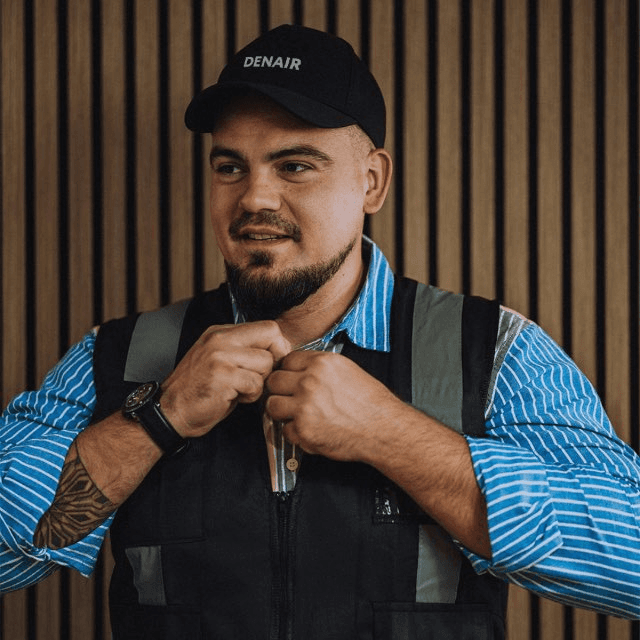
HVAC Engineer · Certified HVAC Specialist · Manager at DENAIR
16 years in HVAC
Denis is a hands-on HVAC engineer and certified HVAC specialist working with DENAIR in Dubai.
Share the equipment, the rooms affected, previous work and available access. DENAIR can assess the relevant scope.

HVAC repair, maintenance, installation and fresh-air work for Dubai properties.
DENAIR is operated by BAFOEV TECHNICAL SERVICES L.L.C. Dubai DET License No. 1118204.