HVAC decision guide
HVAC Engineer · Certified HVAC Specialist · Manager at DENAIR, Dubai
The first useful check for an O General repair enquiry is what equipment the name refers to. Identify the label on the actual unit, its product family and the controller that operates it. A description such as “central AC” or “General unit” is too broad to select a manual or define a site visit.
Choose the correct document family
GENERAL's official download library separates split and window units, multi-split equipment, AIRSTAGE VRF and ventilation products. Those categories help organise a document search; they do not establish which one is installed in your property. Copy the complete model from a safely accessible label or existing paperwork, including its letters and suffixes.
If the unit is concealed or the outdoor equipment is in a restricted area, ask for identification during the visit. Building management may have an asset schedule. Keep that information alongside the room served and the controller rather than sending an unexplained close-up of a remote alone.
Clarify what “not cooling” describes
Note whether the controller lights up, a fan runs, air is felt at the outlet or the room remains warm despite an apparent cooling command. Record affected and unaffected rooms separately. Do not infer a refrigerant fault from a room complaint or assume that every concealed unit is a refrigerant-based split system.
In a DENAIR Burj Khalifa record, two FCUs had been connected; one operated while the other actuator received no power from the existing controls. The record establishes that local finding but not the second unit's completed repair. No O General brand was identified there. The example shows why system identification must precede a parts or refrigerant recommendation.
Give the visit the right access and history
Tell the service team which equipment locations can be reached, whether permission is needed and what previous work was done. Include any available report rather than reduce it to “gas was added”. If a warning appears, keep its exact display and timing for the technician to compare with the correct documentation.
Do not open live panels, bypass protection or change installer settings to investigate a fault. Ordinary operating information and safe photographs are enough for the initial brief. Tests of components, power or refrigerant belong in the equipment-specific on-site scope.
Compare proposals by what they establish
Ask the investigator to distinguish a visible condition, a tested failure and a possible cause that still needs confirmation. A repair quote should tie its part and labour scope to the identified equipment. It should also state what remains inaccessible and what check can be performed after the work.
DENAIR's founder observes O General frequently in enquiries; that is a business observation, not a market-share statistic or a failure-rate claim. This article makes no manufacturer-authorised-service claim and presents no verified O General repair outcome.
Send the model, system description, controller and access constraints to AC repair and diagnostics. If the issue is spread across a villa, attach a room-to-unit list so the visit can distinguish individual-unit findings from a shared-system question.
Manufacturer references

DENAIR field photograph of a concealed indoor unit. The pictured equipment is not identified as O General.
Explore the relevant scope
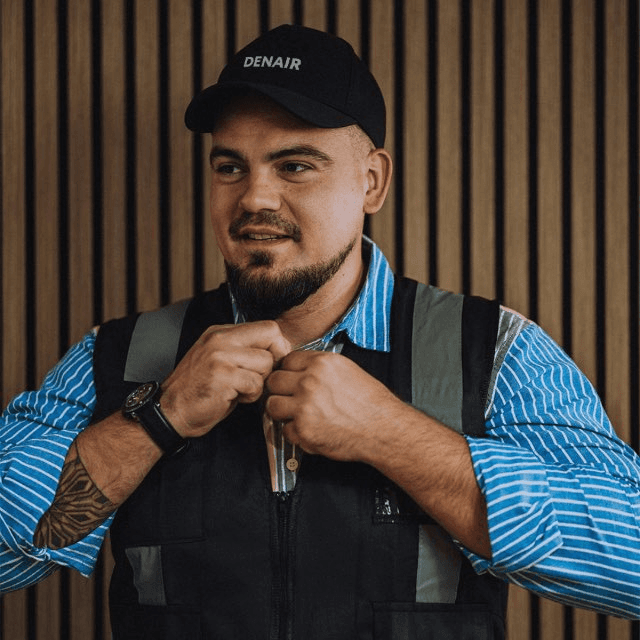
HVAC Engineer · Certified HVAC Specialist · Manager at DENAIR
16 years in HVAC
Denis is a hands-on HVAC engineer and certified HVAC specialist working with DENAIR in Dubai.
Share the equipment, the rooms affected, previous work and available access. DENAIR can assess the relevant scope.

HVAC repair, maintenance, installation and fresh-air work for Dubai properties.
DENAIR is operated by BAFOEV TECHNICAL SERVICES L.L.C. Dubai DET License No. 1118204.