HVAC decision guide
HVAC Engineer · Certified HVAC Specialist · Manager at DENAIR, Dubai
For a Midea AC complaint, separate the equipment's documented features from the features you assume it has. The exact model and remote matter because a selected mode, sensor function or optional setting can change how the operating information should be interpreted. Begin with identification before discussing parts.
Capture the unit and the way it is controlled
Use a safely accessible model label or existing manual, and include the remote or wired controller. Preserve the full code rather than shorten it to a marketing series. If the label cannot be reached safely, request identification during the site visit instead of opening covers or climbing to equipment.
The official Midea MSAGB-series manual describes a Follow Me function for some models, using temperature information from the remote. Its optional-feature wording matters: this is not a statement that every Midea unit supports the feature or that the remote in your home is correctly matched. The cited regional manual is a documentation example, not evidence of a DENAIR installation of that series.
Explain what changed during normal use
Record the selected mode, displayed setting, remote position and room where the symptom occurs. If a feature has been used, mention it without changing settings purely to provoke a fault. Keep any safely obtained room-temperature measurement separate from the selected temperature.
Does the complaint appear only after a period of operation, only in one room or after a service or control change? This history can help the technician decide which check is relevant. It does not establish a failed sensor, board or refrigerant shortage.
Keep a control success separate from another complaint
At DENAIR's Port de la Mer project, Nest controllers were connected, app settings and room names were arranged, and operation was checked for that scope. A separate leak remained unresolved in the supplied record: it was not attributed to the drain line, while a pump was only a hypothesis. No Midea equipment is established there.
The distinction is relevant to an enquiry that includes both a controller concern and another symptom. A completed controls task should not erase an unresolved water complaint or be used as proof of the condition of a different component.
What the repair scope should say
Ask which model document applies, what the investigator observed and what test supports the proposed remedy. If a part is recommended, the scope should identify its compatibility and access requirements. Where a symptom remains unexplained, request the next investigation rather than a confident result statement unsupported by a test.
Do not follow online dismantling instructions, change installer settings or handle refrigerant connections. Safe operating observations, model information and previous reports form the initial brief.
Send those details to AC repair and diagnostics. DENAIR can discuss the relevant inspection scope. This article provides no Midea-authorised-service claim, no series-specific fault diagnosis from a symptom alone and no verified Midea project outcome from the supplied archive.
Manufacturer references

DENAIR field photograph of an indoor HVAC unit. The equipment is not identified as Midea and the image does not establish a diagnosis.
Explore the relevant scope
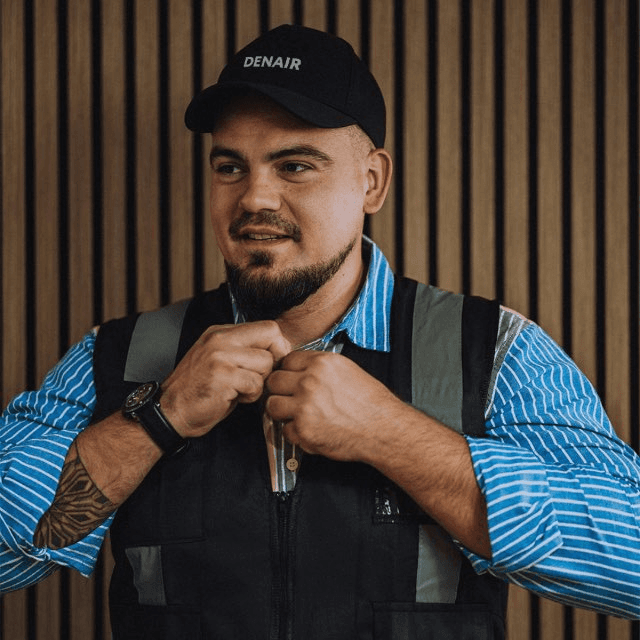
HVAC Engineer · Certified HVAC Specialist · Manager at DENAIR
16 years in HVAC
Denis is a hands-on HVAC engineer and certified HVAC specialist working with DENAIR in Dubai.
Share the equipment, the rooms affected, previous work and available access. DENAIR can assess the relevant scope.

HVAC repair, maintenance, installation and fresh-air work for Dubai properties.
DENAIR is operated by BAFOEV TECHNICAL SERVICES L.L.C. Dubai DET License No. 1118204.