DENAIR engineering decisions · Diagnostics and service evidence
HVAC Engineer · Certified HVAC Specialist · Manager at DENAIR, Dubai
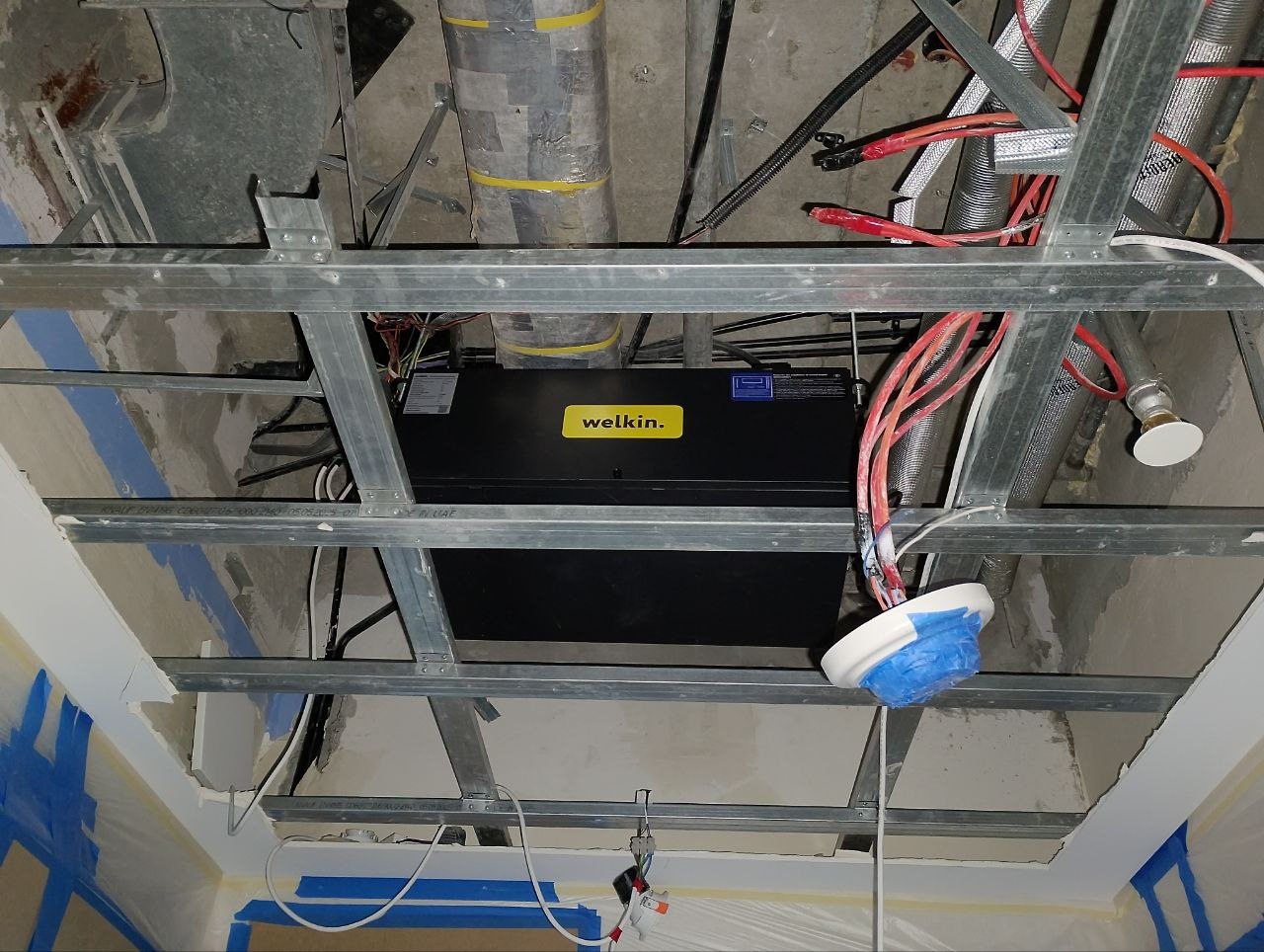
Dehumidification equipment and duct arrangement at Oceana Residence during DENAIR work. DENAIR field record; this image documents the pictured equipment or work stage, not a verified result for another property.
Identify the device and the symptom
Record whether the equipment is portable or ducted, its safely visible model information and the observed complaint. Distinguish no water collection, water in an unexpected location, an alarm, unusual noise and a persistent room-humidity concern. These observations help define an inspection without deciding which part must be replaced.
For concealed equipment, identify the permitted access route and responsible building contact. Do not open powered electrical or refrigerant compartments yourself. The model and installation determine the appropriate technical tests and any supported service scope.
Separate operation, water removal and discharge
A fan running, a control display responding and water being removed are different observations. Ask the technician to record the relevant operating conditions and what response was actually checked. If water removal could not be observed under the visit conditions, that remains a limitation.
The pan, pump or gravity drain arrangement and downstream discharge need their own verification where applicable. A connected hose is not proof of unobstructed discharge throughout the route. The report should identify which section was reached and what result was observed, rather than asserting that every concealed drain is clear.
The Oceana record has different counts for different tasks
DENAIR's published Oceana account records repair of one dehumidifier, GI duct balancing and drainage connections for three units, with later access coordination. It does not establish final performance for all three devices. One repair and three drain connections should therefore remain separate entries.
The field photograph here shows ducted dehumidification equipment and its ceiling arrangement at Oceana. It documents the installed context, not measured water-removal capacity, a universal repair offer or a verified final humidity result.
Use a follow-up record that matches the question
Where room humidity is the concern, record timing, HVAC state, doors and windows and any available measurements under useful comparable conditions. Do not infer an all-day result from one short observation or promise a litres-per-day performance figure without the applicable test context.
Request the identity of the serviced unit, approved work, tests completed and remaining limitations. If another device or building condition needs assessment, keep it separate. Discuss model coverage and the actual inspection scope before assuming that a general repair booking covers every dehumidifier arrangement.
Keep this evidence with the enquiry
Device identity and factual symptom.
Operating response and observed water removal.
Drainage section reached and discharge evidence.
Room-condition follow-up and unresolved devices or access.
Plan the appropriate next step
For the relevant service scope, review DENAIR ac repair diagnostics. Compare the documented field record, the related problem assessment and the related practical guide before agreeing work for your property.
Discuss this scope on WhatsApp · Call DENAIR: +971 58 596 3441
Explore the relevant scope
HVAC Engineer · Certified HVAC Specialist · Manager at DENAIR
16 years in HVAC
Denis is a hands-on HVAC engineer and certified HVAC specialist working with DENAIR in Dubai.
Share the equipment, the rooms affected, previous work and available access. DENAIR can assess the relevant scope.

HVAC repair, maintenance, installation and fresh-air work for Dubai properties.
DENAIR is operated by BAFOEV TECHNICAL SERVICES L.L.C. Dubai DET License No. 1118204.