DENAIR engineering decisions · Diagnostics and service evidence
HVAC Engineer · Certified HVAC Specialist · Manager at DENAIR, Dubai

Airflow reading at a grille in the Al Barsha showroom. DENAIR field record; this image documents the pictured equipment or work stage, not a verified result for another property.
Read the quantity and the method
Air speed at one point and airflow volume through an outlet are different quantities. An interpretation depends on the measurement method, the effective area used where applicable, and whether the reading represents one point or the outlet as a whole. Ask the report to identify units rather than presenting an unexplained number beside a photo.
The instrument, outlet identity, date and test position make the record traceable. A photograph of a meter is useful supporting evidence, but it may not show the complete method or the conditions needed to reproduce the result.
Record the system state beside the number
Fan setting, damper position, filter condition, open or closed doors and the active equipment affect interpretation. Compare before and after readings under reasonably matched conditions. If the conditions changed, explain the difference instead of treating the numbers as a controlled performance comparison.
Ask whether the visit compared actual results with an available design schedule or simply investigated a complaint. A room-by-room investigation can still be valuable without a complete design record, but its limitations should remain explicit. Avoid inventing a target for every grille from a generic internet rule.
What the showroom evidence supports
DENAIR's commercial showroom record includes a grille airflow reading and a completed damper-actuator item. It does not document final whole-showroom airflow acceptance. The photograph used here is that local measurement evidence; it should not be read as a certificate for every room or operating mode.
This distinction helps an owner separate an installed component, an individual reading and a completed balance. Those three states can occur at different times and require different evidence.
Use the report to choose the next action
Request a schedule that matches each reading to its room, outlet and system. Where a branch differs from the intended result, ask what investigation supports the proposed adjustment. Opening every damper blindly can shift the problem between rooms without establishing its cause.
Agree which rooms and modes will be rechecked after an approved change, and whether noise and return routes also need review. Record inaccessible outlets, unavailable drawings and operating restrictions. A concise report that states these limits is more useful than a long table with no explanation.
Keep this evidence with the enquiry
Outlet ID, measured quantity, units and method.
Instrument and relevant measurement area or sampling approach.
Fan, damper, door and filter state.
Comparison basis, unresolved branches and agreed recheck.
Plan the appropriate next step
For the relevant service scope, review DENAIR air quality filtration. Compare the documented field record, the related problem assessment and the related practical guide before agreeing work for your property.
Discuss this scope on WhatsApp · Call DENAIR: +971 58 596 3441
Explore the relevant scope
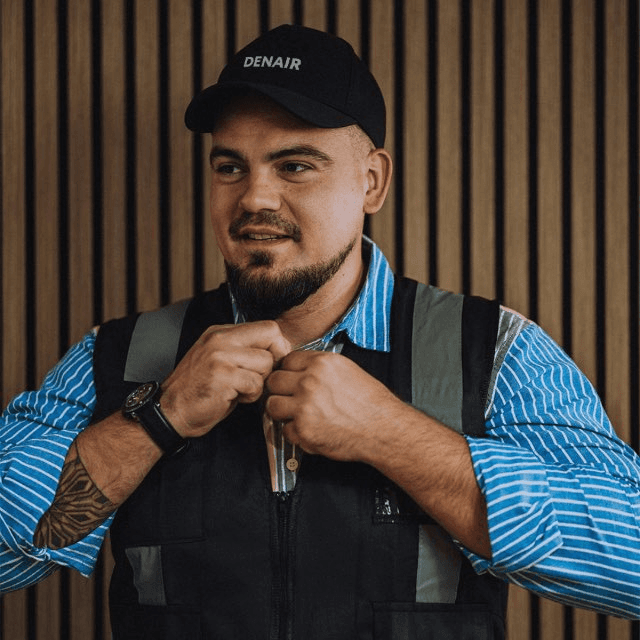
HVAC Engineer · Certified HVAC Specialist · Manager at DENAIR
16 years in HVAC
Denis is a hands-on HVAC engineer and certified HVAC specialist working with DENAIR in Dubai.
Share the equipment, the rooms affected, previous work and available access. DENAIR can assess the relevant scope.

HVAC repair, maintenance, installation and fresh-air work for Dubai properties.
DENAIR is operated by BAFOEV TECHNICAL SERVICES L.L.C. Dubai DET License No. 1118204.