DENAIR engineering decisions · Diagnostics and service evidence
HVAC Engineer · Certified HVAC Specialist · Manager at DENAIR, Dubai

Fabricated duct components at a villa worksite. DENAIR field record; this image documents the pictured equipment or work stage, not a verified result for another property.
Record one change at a time
Note the room, supply outlet, controller setting and fan state. Where normal use permits, compare the complaint with the door open and closed while keeping the other conditions similar. Record whether the change is at the grille, in room comfort, at the door gap or in noise. A hand held at an outlet is an observation, not a measured airflow rate.
Do not block fire doors, remove safety devices or cut a transfer opening to perform this comparison. If doors form part of a building's fire or smoke arrangements, the responsible team must assess any proposed change.
Supply air needs a route back
A supply duct brings air into the room; the return arrangement allows air to leave that room and reach the intended return side. New partitions, doors and finishes can alter that route even if the supply grille has not moved. A return grille's presence also does not prove that the concealed connection is complete or adequately sized.
Ask the survey to map the actual supply, return and transfer paths, including any shared spaces. Where pressure or airflow measurements are needed, the method and door positions should be recorded so the result can be repeated. Avoid prescribing a universal door gap or grille size without the design and site constraints.
The Victory Heights design decision
DENAIR's Victory Heights record states that some indoor units lacked sufficient return-air routes. Transfer grilles, a silencer and a filter box were specified in the fresh-air arrangement. The record also separates reported installation milestones from unconfirmed whole-system acceptance.
That is useful evidence for coordination, rather than proof that every closed-door complaint has the same cause. The field image here shows fabricated duct components at a villa worksite. It illustrates the physical routing work involved, not a measured result for this room.
Decide between a local obstruction and a design change
An accessible obstruction, a disconnected path and a proposed new room arrangement call for different scopes. Request the finding by room and the exact boundary of any proposed alteration. Adding outside air is not automatically a substitute for a missing return route.
Before approving a change, agree who checks building interfaces, noise, service access and relevant fire-related requirements. After installation, compare the room under the intended door position and operating state. Keep any unmeasured or inaccessible branch in the open-items record.
Keep this evidence with the enquiry
Same room and operating settings compared.
Door position, noise and comfort observations recorded.
Supply, return and transfer routes identified.
Proposed alteration and post-work measurement scope agreed.
Plan the appropriate next step
For the relevant service scope, review DENAIR ac repair diagnostics. Compare the documented field record, the related problem assessment and the related practical guide before agreeing work for your property.
Discuss this scope on WhatsApp · Call DENAIR: +971 58 596 3441
Explore the relevant scope
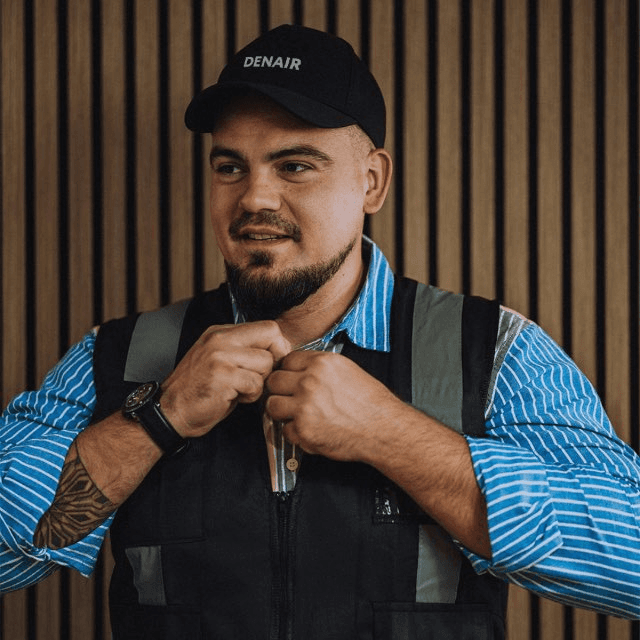
HVAC Engineer · Certified HVAC Specialist · Manager at DENAIR
16 years in HVAC
Denis is a hands-on HVAC engineer and certified HVAC specialist working with DENAIR in Dubai.
Share the equipment, the rooms affected, previous work and available access. DENAIR can assess the relevant scope.

HVAC repair, maintenance, installation and fresh-air work for Dubai properties.
DENAIR is operated by BAFOEV TECHNICAL SERVICES L.L.C. Dubai DET License No. 1118204.